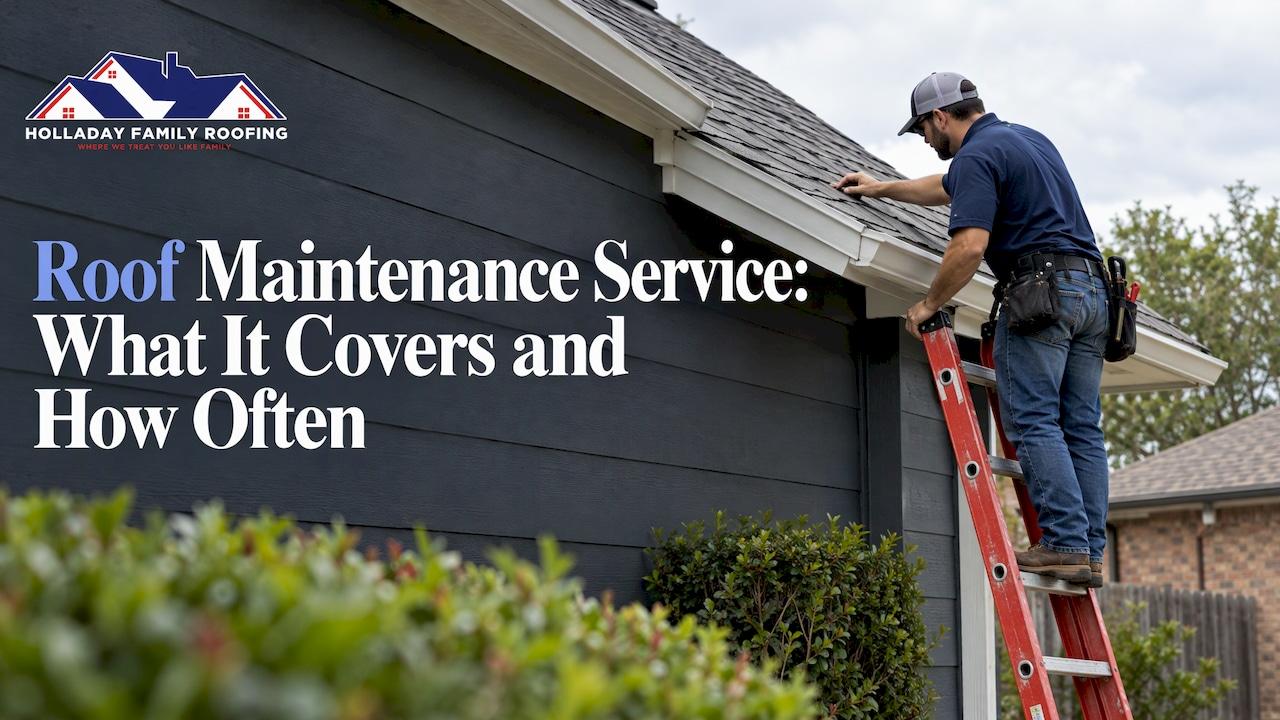
A professional roof maintenance service is a scheduled visit in which a trained crew inspects every part of your roof, clears debris, and makes small repairs before they become leaks. Plan on one visit a year at minimum and ideally two, in spring and fall, plus a check after any severe storm. Holladay Family Roofing has served Houston, Pearland and Friendswood for over 20 years, and a free roof inspection is the simplest way to start.
TL;DR
- Maintenance means inspecting the whole roof, checking flashing and penetrations, clearing drains and gutters, and fixing small defects early.
- The National Roofing Contractors Association (NRCA) says inspections twice a year can uncover problems. Add a check after hail or high wind.
- Insurance pays for storm damage, not for age or wear, so a documented roof history helps you.
- Roof work is dangerous. Inspect from the ground and leave the roof itself to professionals.
- Houston-area owners can request a free estimate from Holladay Family Roofing. An estimate is not a booking or a price quote.
Table of Contents
- What a roof maintenance service actually includes
- How often should a roof be maintained?
- Residential roof maintenance: what homeowners should do
- Commercial roof maintenance: what property managers need
- What does roof maintenance cost?
- Maintenance, insurance claims and your paper trail
- Choosing a professional for roof maintenance
- Matching maintenance to your roof type
- Start with a free roof inspection
- FAQ
- Sources
What a roof maintenance service actually includes
Maintenance is not a cleaning pass and a quick look. A thorough visit works through the roof system in order, from the surface to the drainage.
Surface inspection. On a shingle roof, the crew looks for cracked, warped, curling or missing shingles. NRCA lists these, along with loose seams and deteriorated flashing, as problems that regular inspections can uncover. On tile, they look for cracked or slipped pieces. On metal, they check loose fasteners and panel seams.

Flashing and penetrations. Flashing is the thin metal that seals the joints where the roof meets a chimney, wall, vent or skylight. Pipe boots are the rubber collars around plumbing vents. These are the most common leak points because the sealant and rubber age faster than the roof surface. If you want to understand them better, see our guides on flashing repair and roof boot repair.
Gutters, drains and debris. A service should clear leaves and debris from gutters, downspouts and roof drains. It should also look at the granules in your gutters. Excess shingle granules in the gutters or downspouts are another sign NRCA lists as something inspections can uncover, because they show the surface is wearing.
Small repairs on the spot. Typical minor fixes include re-securing popped nails, resealing small gaps, re-attaching lifted tabs or ridge caps, replacing a failed pipe boot and tightening loose flashing fasteners. One published tune-up guide lists this kind of scope, and it is a useful benchmark for what a real visit should contain.
A written record. The ICSC, a retail-property industry body, stresses that documentation is an essential part of any inspection and maintenance program. For a business that means logging who goes on the roof and who services rooftop equipment. For a homeowner it means keeping dated reports and photos.
How often should a roof be maintained?
The industry guidance is consistent. NRCA's owner guidance says all roofs need periodic inspection and maintenance. It recommends that owners inspect at least twice a year, in spring and fall, and after any severe storm. It also says to keep roof drains clear of leaves and debris. The ICSC's best-practices article agrees. It calls for inspection by someone trained in the roof's materials at least twice a year and after major weather events.
What does that mean on the Gulf Coast? Our summers are long and hot, our storms are intense, and trees drop debris onto roofs and into gutters. A good rhythm for a Houston-area property looks like this:
| When | What to do |
|---|---|
| Early spring | Professional inspection after winter, before storm season. Clear gutters and drains. |
| After any hail or high-wind event | Ground-level look first, then a professional inspection if you see anything unusual. |
| Fall | Second inspection and small repairs, with gutters cleared again after leaf drop. |
| After any leak | Call a roofer promptly and note when it rained and from which direction the wind blew. |
NRCA suggests noting the rain intensity, wind direction, temperature and time of year when you report a leak. That helps trace where the water got in.
Residential roof maintenance: what homeowners should do
Your part is observation from the ground. Do not climb onto the roof. Falls cause severe injuries, and NRCA warns that most roofing work should not be done by homeowners because professionals are trained to work safely and improper techniques can damage the roof.
Twice a year, and after storms, walk around the house and look up. Binoculars help. Watch for:
- Shingles that are missing, curled, cracked or visibly lifted
- Dark streaks or bare patches where granules have worn away
- Gutters full of grit, or sagging sections
- Rusted or bent flashing around chimneys and vents
- Debris or branches resting on the roof
Inside, check ceilings and walls. NRCA notes that cracked paint, discolored plasterboard and peeling wallpaper can signal damaged areas of the roof. Look in the attic with a flashlight for damp insulation or stained wood, but only if you can do it safely.
If a ceiling is bulging or sagging with water, do not poke it, and keep away from any wet areas near light fixtures or wiring. Move belongings and call a professional. Our guide to emergency roof repair in Houston covers what to do first.
A clean, simple ladder check of gutters is the most NRCA suggests for a homeowner: a firmly braced or tied-off ladder with rubber safety feet, rubber-soled shoes, and staying on the ladder rather than stepping onto the roof. Many owners prefer to hand even that to a professional.
Commercial roof maintenance: what property managers need
Commercial roofs are usually low-slope or flat, so they hold water, collect debris and carry equipment. That changes the checklist.
- Drainage. Both the ICSC and manufacturer guidance recommend that ponding water not sit on the roof more than 48 hours after rain. Drains, scuppers and downspouts need regular clearing.
- Seams and membranes. Membrane roofs such as TPO and EPDM need seam checks and an eye for blisters, punctures and lifted edges.
- Rooftop traffic. The ICSC recommends walkways for regular foot traffic and restricted roof access, since technicians servicing HVAC equipment are a common source of damage.
- Reflective surfaces. White membranes should be cleaned about every two years to maintain reflectivity, according to the ICSC.
- Records. Keep an access log, inspection reports, repair invoices and warranty paperwork in one file. It supports claims, warranty questions and replacement planning.
For what an inspection covers and how often to schedule it, read our commercial roof inspection guide. If a leak has already started, see commercial roof leak repair. A roof near the end of its life is a planning question, covered in commercial roof replacement.
Roof coatings are a maintenance option for many commercial roofs. They add a protective layer over the existing surface. Learn more about roof coatings and whether your roof is a candidate.

What does roof maintenance cost?
Cost depends on roof size, height, pitch, material and what the visit includes. For a general idea, one 2026 industry pricing guide puts annual maintenance for most single-family U.S. homes at roughly $250 to $900. That range covers everything from a basic inspection to a cleaning-inclusive service. The same site gives commercial flat-roof tune-ups as a per-square-foot rate. These are national figures from one publication, not a Houston price, and they are not a quote.
Your actual cost comes from a project-specific estimate based on your roof. Holladay Family Roofing offers free estimates and does not publish set prices for its services.
Here is why this money is well spent: a maintenance visit is often a small fraction of what a leak costs once water reaches insulation, drywall and framing. It can also help you put off replacement. For the long view, see roof replacement.
Maintenance, insurance claims and your paper trail
Maintenance and insurance work together. The Texas Department of Insurance (TDI) explains in its guide to roofs and insurance that you can file a claim if a storm, tree or something else damages your roof. It also warns that your insurance company will not pay for a new roof just because it is old or worn out. Insurance covers sudden damage, and upkeep is on you.
So dated inspection reports and photos matter. They show your roof's condition before a storm and help separate storm damage from ordinary wear. TDI also advises checking whether your deductible for wind and hail differs from other deductibles, because you could pay more out of pocket after a storm.
After a storm:
- Stay off the roof and look from the ground for missing shingles, dented gutters or debris.
- Take dated photos of what you see, inside and out.
- Prevent further damage where it is safe, for example by moving items away from a leak.
- Call your insurer to start a claim and ask for a copy of your policy terms.
- Have a roofer inspect the roof.
Holladay Family Roofing assists homeowners with insurance claims. We cannot promise that any claim will be approved or what it will pay, because that is your insurer's decision under your policy. For more on this, read storm damage roof repair in Houston.
Choosing a professional for roof maintenance
A good maintenance provider does more than glance at the roof. When you compare, look for:
- A defined scope. What gets inspected, cleaned and repaired, and what is a separate repair?
- Written findings. A report with photos tells you the roof's condition and gives you a record.
- Repair capability. The crew that finds a problem should be able to fix it, whether it is a failed boot, damaged flashing or worn shingles.
- Material experience. Shingle, metal, tile and flat roofs fail in different ways.
- A warranty in writing. Ask for the written terms of any warranty for your specific project. Do not assume one warranty covers everything.
- Local knowledge. Houston heat, humidity, wind-driven rain and tropical storms shape how roofs age here.
Holladay Family Roofing is a family-first company that works on residential and commercial roofs, from asphalt shingle and metal to tile and coatings. It offers a ten-year no-leak warranty. Warranty terms are project-specific and set out in writing, so review the written terms for your job.
Matching maintenance to your roof type
Asphalt shingles. They are the most common roof in the Houston area. Watch granule loss, curling and lifted tabs, and keep an eye on the sealed areas around vents. Learn what can be fixed and when to call a pro in our shingle roof repair guide.
Metal roofs. Panels shed water well, but fasteners, seams and sealants need attention. The Institute for Catastrophe Research and Reduction's guide for business and property owners lists loose screws and deteriorated rubber washers on metal panels among the things to check. It also says that if fall protection is not available, it is best to hire a licensed contractor.
Tile. Cracked or missing tile is the main concern, and walking on tile can break it, which is another reason to leave inspection to a professional.
Flat and low-slope roofs. Drainage, seams and ponding are the focus, as covered above.
If an inspection shows a roof is past repair, replacement is the honest answer. A roofer who maintains and repairs roofs can tell you whether you are looking at a fix or a replacement. If you are weighing a metal roof over shingles, that guide explains when it works.
Start with a free roof inspection
Holladay Family Roofing offers free roof inspections and free estimates for homeowners and commercial property owners in Houston, Pearland and Friendswood. If a problem turns up, our roof repair team can handle it. You can also see our recent roofing projects.

If you are outside Houston, Pearland or Friendswood, please contact us to confirm availability before you plan on a visit.
Next step: Request a free estimate or call (832) 883-3930.
FAQ
How often should I have my roof professionally maintained?
At least once a year, and twice a year is better, in spring and fall. NRCA and the ICSC both recommend twice-yearly inspections plus a check after severe weather. Older roofs, roofs under trees and flat roofs benefit most from the second visit.
What is the difference between a roof inspection and roof maintenance?
An inspection finds and documents the roof's condition. Maintenance goes further by clearing debris, resealing and making minor repairs. Many owners start with an inspection, and Holladay Family Roofing offers free roof inspections for that purpose.
Can I maintain my roof myself?
You can do ground-level observation and, where it is safe, gutter cleaning from a secured ladder. NRCA advises that most roofing work should be left to professionals because of fall risk and the chance of damaging the roof. Never climb a damaged or wet roof, and stay away from electrical lines.
Does insurance pay for roof maintenance?
Generally no. TDI says insurers will not pay for a new roof just because it is old or worn out. Coverage is for damage from events such as storms, and it depends on your policy. Read your policy and talk to your insurer about what applies.
What does roof maintenance cost in Houston?
There is no single price. National guides put annual maintenance for a typical home in the low hundreds to the high hundreds of dollars, depending on scope. Your cost depends on your roof, so request a free estimate for a project-specific figure.
Sources
- National Roofing Contractors Association: roofing resources and owner guidance
- ICSC: Best practices to maintain your roof
- Texas Department of Insurance: Insurance and your roof
- ICLR: How to inspect and maintain your commercial roof
- The Roofing Brief: Annual Roof Tune-Up Cost 2026
- The Roofing Brief: Roof Maintenance Cost 2026