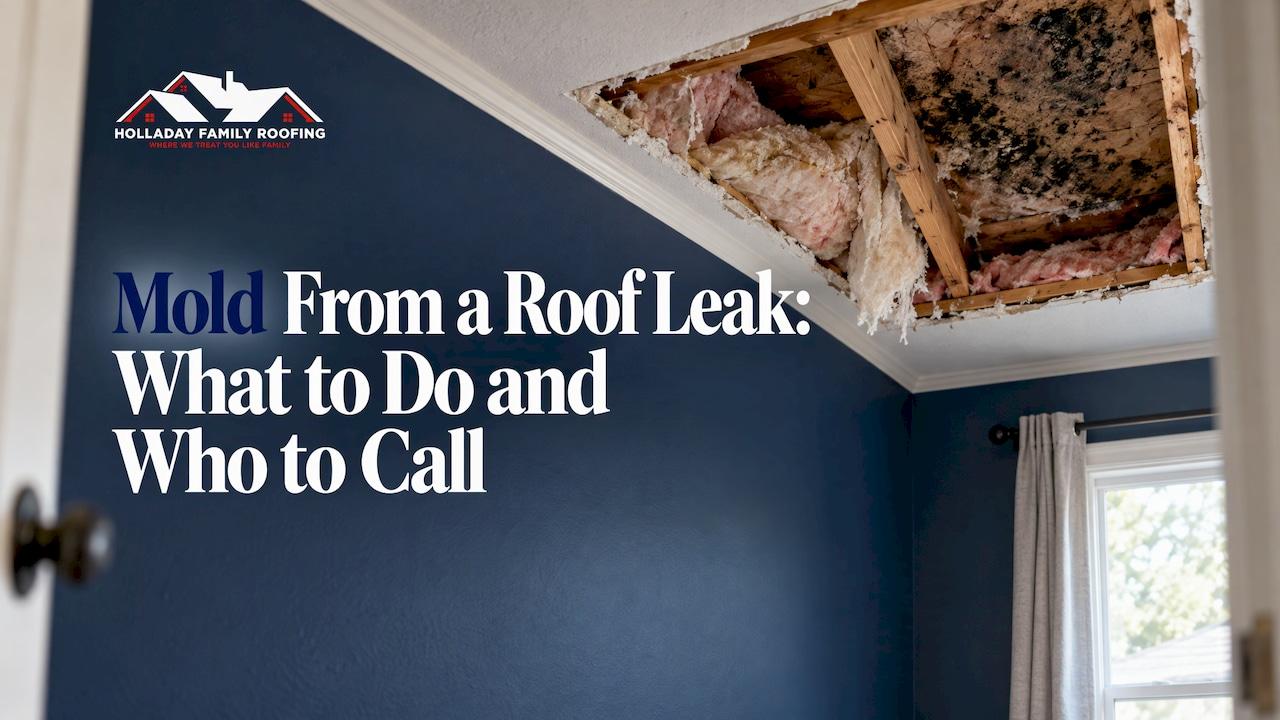
Yes, a roof leak can cause mold. Mold grows wherever building materials stay wet, and the CDC lists leaks in roofs among the places it shows up. The fix has two separate parts. A qualified roofer finds and repairs the leak so no more water gets in. A qualified remediation professional deals with any mold that has already grown inside. Cleaning the mold without fixing the roof only buys time, because the EPA says that if you clean up mold but don't fix the water problem, it will most likely come back.
This guide is written for Houston-area homeowners and property owners. It covers how fast mold can start, where it hides, what to do from the ground, how Texas insurance and licensing rules touch the job, and how to keep mold from returning.
TL;DR
- Mold can start when wet materials stay wet longer than 24 to 48 hours. Drying fast, and stopping the water at its source, is the whole game.
- A roofer repairs the leak. A licensed mold professional handles contaminated interior materials. Holladay Family Roofing handles the roof side only, not mold testing or remediation.
- Stay on the ground. Do not climb a damaged roof, poke a sagging or bulging ceiling, or work near wet electrical fixtures.
- Take photos and contact your insurance company before cleanup. Texas policies treat sudden leaks and gradual leaks differently.
- You can request a free estimate for the roof repair at Holladay Family Roofing or call (832) 883-3930.
Table of Contents
- How a roof leak turns into mold
- Where mold hides after a roof leak
- What to do in the first 48 hours
- Roof repair, water restoration and mold remediation are three different jobs
- How much mold is too much to handle yourself
- Is mold from a roof leak a health concern?
- Insurance and mold: what Texas policyholders should know
- How a roofer finds the source of the leak
- Keeping mold from coming back after the repair
- Let Holladay Family Roofing check the roof side
- FAQ
- Sources
How a roof leak turns into mold
Mold spores are already in the air of nearly every home. They only become a problem when they land on something damp and stay there. The CDC explains that mold grows on paper, cardboard, ceiling tiles and wood, and also in dust, paint, insulation, drywall, carpet and fabric, wherever there is moisture. A roof leak supplies exactly that: a slow, repeated source of water that soaks into decking, insulation and drywall.
Timing matters. The EPA states that if wet or damp materials are dried within 24 to 48 hours, mold in most cases will not grow. That is the reason a small drip you ignore for a month is worse than a big storm leak you deal with the next day.
Houston adds its own conditions. Long humid stretches slow drying, and attics get hot and damp. A leak that never shows up as a stain can still keep insulation and wood wet for weeks. The U.S. Department of Energy notes that exhaust fans venting into an attic add moisture, so a leak and a ventilation problem can compound each other.

What happens if the leak keeps going
Mold is not only a surface issue. The EPA's mold course points out that if a roof is allowed to leak long enough, molds can weaken floors and walls by feeding on wet wood. Mold gradually destroys whatever it grows on, so a persistent leak can turn into a structural repair rather than a cosmetic one. If you suspect the structure itself is affected, the EPA advises bringing in a structural engineer or another professional.
Where mold hides after a roof leak
The stain on your living room ceiling is often not the whole story. Water travels along rafters, down wall cavities and across the top of drywall before it shows. The EPA lists places hidden mold can be found, including roof materials above ceiling tiles, the back side of drywall, the top side of ceiling tiles, inside walls, and inside ductwork.
From inside your home, these are the signs worth noticing:
- A musty smell you can't trace to a visible source. The EPA says you may suspect hidden mold if a building smells moldy but you cannot see where.
- Brown or yellow ceiling stains, especially rings that grow after rain.
- Paint that bubbles, peels or flakes on a ceiling or upper wall.
- Drywall that feels soft, damp or warped.
- Dark spots in corners, around light fixtures, or near attic access hatches.
- A ceiling that sags or bulges, which means water is pooling behind it.
Houston-area homes often have attics you can look into from the hatch. If you can see the attic safely from a ladder at the hatch without stepping onto joists or insulation, look for darkened wood, damp insulation or daylight where you shouldn't see any. Don't walk the attic floor if it isn't decked, and don't go in during peak heat. Otherwise, leave attic inspection to a pro.
What to avoid
Some of the most common instincts make the problem worse or put you at risk:
- Do not climb onto a damaged or wet roof to look for the hole. Roofs that have leaked can have weakened decking, and wet surfaces are slick.
- Do not poke or puncture a sagging ceiling to release water. A bulge can hold a lot of water and drop plaster, insulation and debris on you. It may also sit near wiring.
- Stay away from wet electrical fixtures, outlets and panels. Treat water near any of them as an electrical hazard and turn the power off at the breaker only if you can reach the panel without standing in water. Otherwise, call an electrician.
- Don't disturb visibly contaminated materials by tearing them out without protection.
- Don't mix cleaning products. The Massachusetts Department of Public Health specifically warns against mixing bleach and ammonia.
What to do in the first 48 hours
Act on the water first and the mold second. In order:
- Protect yourself and your family. The CDC's cleanup guide advises that people with breathing problems such as asthma, or with weakened immune systems, stay away from moldy areas, and that children should not take part in cleanup.
- Check for hazards. The same guide says to make sure electricity and gas are off where needed and to look for sagging ceilings or floors and other structural problems. If you see them, keep out of that room.
- Document everything. The CDC advises contacting your insurance company and taking pictures of your home and belongings before you start cleanup. Photograph stains, drips, damaged items and the date.
- Move belongings and catch drips. Put buckets under active drips and move furniture and electronics out of the area. Open windows or run fans and a dehumidifier in the affected room if it is safe to do so.
- Dry the area. The CDC calls drying your home and removing water-damaged items the most important step for preventing mold damage. The EPA adds that more air circulation and a higher temperature speed up drying.
- Call a roofer. Get the source of the water found and repaired. Ask for temporary protection if more rain is coming.
A roofer's inspection also helps your records. A written description of where water is entering the roof gives you something concrete to share with your insurer.
Roof repair, water restoration and mold remediation are three different jobs
Homeowners often expect one contractor to handle everything. In practice there are three kinds of work, done by different professionals.
| Job | What it covers | Who does it |
|---|---|---|
| Roof repair | Finding where water enters (flashing, penetrations, damaged shingles, worn seams, failed sealant) and fixing it | A qualified roofer |
| Water restoration | Drying out wet structure and contents, removing water-damaged materials | A water mitigation or restoration company |
| Mold assessment and remediation | Testing, removing and cleaning mold-contaminated materials | A mold professional licensed in Texas |
Holladay Family Roofing works on the first row. We repair and replace roofs. We do not offer mold testing or mold remediation, so for interior contamination you will want a qualified remediation professional.
What Texas requires of mold professionals
In Texas, the Department of Licensing and Regulation (TDLR) regulates mold work. TDLR states that it licenses the people who inspect and test for mold and those who clean up and remove it. It also notes that in most instances, visible mold covering less than 25 contiguous square feet can be cleaned by people who are not licensed, with some exemptions depending on the building. For larger areas, or if you want an assessment, hire a licensed professional. The Texas Department of Insurance (TDI) adds that if you file a mold claim, you should make sure the mold professional has a state license.
How much mold is too much to handle yourself
The EPA's mold course divides remediation jobs into small (under 10 square feet of mold), medium (10 to 100 square feet) and large (over 100 square feet), and says a remediation manager should be selected for medium or large jobs. Los Angeles County's public health department gives a practical picture of the small category: roughly a 3 foot by 3 foot patch, which in most cases a homeowner can handle.
Two cautions apply even for small areas:
- Porous materials often have to go. The same county guidance says absorbent materials such as ceiling tiles and carpet that become moldy may need to be replaced.
- Painting over it does not work. The CDC says painting or caulking over mold will not prevent it from growing.
For hard, non-porous surfaces, the CDC says mold can be removed with household products or soap and water. Use one product at a time, wear the protective gear the CDC recommends (at least an N-95 respirator, non-latex gloves and goggles), and don't mix products. Wet ceiling drywall, insulation, and anything in an attic is a different matter. Leave those to qualified professionals.
You also don't need to identify the mold type first. The CDC states that you do not need to know the type of mold to address a mold problem, and the Massachusetts health department does not recommend environmental testing to confirm types and amounts. The practical steps are the same either way: stop the water, dry the space, remove what can't be dried or cleaned.
Is mold from a roof leak a health concern?
It can be, especially for some people. The CDC states that damp and moldy environments may cause a stuffy nose, sore throat, coughing or wheezing, burning eyes or skin rash, and that people with asthma or mold allergies may have severe reactions. People with weakened immune systems or chronic lung disease may develop lung infections from mold.
We can't tell you what any symptom means or what a specific mold is doing in your home. If someone in your household is having breathing problems or other symptoms, talk to a doctor. For the building itself, bring in a licensed mold professional.
A word on the phrase "toxic black mold": the CDC notes that the term is not accurate, and that hazards from molds that may produce mycotoxins should be considered the same as other common molds that can grow in a house. Color alone doesn't tell you much. Moisture is what tells you to act.
Insurance and mold: what Texas policyholders should know
Insurance is where roof-leak mold gets complicated, so read your own policy and talk to your insurer rather than assuming.
TDI's consumer guidance says most homeowner policies cover sudden and accidental water damage, and that if mold develops on a damaged item in that situation, it would be covered. It also says policies usually won't cover damage from gradual leaks, and that includes mold from them. Many policies don't include mold cleanup and testing, though an insurer may offer to add that coverage. You can read the details on TDI's water damage and mold page.
TDI's order on the standard mold endorsement describes the same structure: mold itself is excluded, ensuing mold from an otherwise covered sudden and accidental water loss is covered, hidden losses must be reported within 30 days, and remediation costs including testing are not covered. Your policy may differ, so check the mold endorsement language against your own documents.
What this means in practice:
- Report early. Don't wait to see if a stain grows. Delay can make a loss look gradual.
- Photograph before cleanup, as the CDC advises, and keep receipts for anything you buy.
- Ask about permanent repairs. TDI advises making temporary repairs to protect your home and not making permanent repairs until your insurance company sees the damage.
- Get the cause in writing. A roofer's written findings on where and how water got in can help you explain the loss.
No roofer can promise your claim will be covered, and we don't. What Holladay Family Roofing can do is help you with insurance claim steps as they relate to the roof, such as documenting roof conditions and the repair needed.
How a roofer finds the source of the leak
The place water drips inside is rarely directly under the hole. A professional looks for the entry point on the roof and traces it. Common culprits on Houston-area roofs include:
- Flashing around chimneys, skylights, walls and vents that has lifted, rusted or lost its seal.
- Plumbing and exhaust penetrations with cracked boots or dried sealant.
- Damaged or missing shingles after high winds or storms.
- Valleys where two roof planes meet and water concentrates.
- Worn seams or fasteners on metal or flat commercial roofs.
- Aging materials that have simply reached the end of their service life.
A leak that is local often means a targeted roof repair. If the decking is widely soaked, the roof is near the end of its life, or leaks keep returning in different places, a conversation about replacement may make more sense. Depending on the roof, options include asphalt shingle roofing, metal roofing, and for some flat or low-slope commercial roofs, roof coatings. A project-specific estimate, not a general rule, tells you which route fits your roof.
Keeping mold from coming back after the repair
Once the roof is sound and the interior has been dried and, where needed, remediated, a few habits keep things dry.
- Control humidity. The CDC advises keeping indoor humidity no higher than 50% all day, and the Louisiana Department of Health recommends 30% to 50%, a useful range in a similar Gulf Coast climate. A cheap hygrometer tells you where you stand.
- Ventilate moisture sources. Bathrooms, laundry areas and kitchens should vent outdoors, not into the attic.
- Ventilate and insulate the attic. The Department of Energy recommends sealing air gaps into the attic, insulating properly and ventilating with soffit and ridge vents.
- Check after big storms. Look at ceilings and upper walls after heavy rain or high winds. New stains are your early warning.
- Replace what can't be dried. Soaked carpet and upholstery that can't be dried right away should go, per the CDC.
- Get the roof looked at on a schedule. Small problems found early are cheaper to fix than a wet attic.
Let Holladay Family Roofing check the roof side
If you have a stain, a smell or a drip, the first step on the roofing side is finding where the water gets in. Holladay Family Roofing has served Houston for over 20 years, with residential and commercial roofing, a family-first approach, free estimates and a free roof inspection. Our primary service areas are Houston, Pearland and Friendswood. If you're outside those areas, contact us to confirm availability.

We also offer a ten-year no-leak warranty. Warranty coverage depends on the project, so ask for the written, project-specific terms before you sign anything. See our roof repair page for what we handle. We don't provide mold testing or remediation, so we'll point the interior side toward qualified help while we deal with the roof.
Ready for the next step? Request a free estimate or call (832) 883-3930. An estimate request is not a booking or a price quote. It starts the conversation about your roof.

FAQ
Will a roof leak always cause mold?
No. Mold needs moisture that lingers. The EPA says that if wet materials are dried within 24 to 48 hours, mold in most cases will not grow. A quick response and a prompt roof repair lower the odds a lot, while slow or repeated leaks raise them.
Who should I call first, a roofer or a mold company?
Call a roofer first, or at the same time, so the water stops coming in. Remediating mold while the roof still leaks wastes money because the moisture returns. Then use a licensed Texas mold professional for the interior contamination.
Can I just spray the ceiling stain with bleach?
We don't recommend DIY chemical fixes on a wet ceiling. The Massachusetts health department says harsh chemicals are not recommended in most cases and warns against mixing bleach and ammonia. Painting over mold doesn't stop it either. For ceiling drywall or attic materials, ask a licensed mold professional.
Does homeowners insurance pay for mold from a roof leak?
It depends on your policy and on whether the leak was sudden and accidental or gradual. TDI says policies usually don't cover gradual leaks, and many exclude mold cleanup and testing. Contact your insurer early, take photos, and read the written terms. Nobody can guarantee coverage in advance.
Does Holladay Family Roofing remove mold?
No. We repair and replace roofs, including finding and fixing the leak. Mold testing and remediation need a qualified, licensed professional. We recommend you request a free estimate for the roof side and ask your insurer or a licensed mold company about the interior.
Sources
- CDC: About Mold
- EPA: A Brief Guide to Mold, Moisture and Your Home
- EPA: Mold Course Chapter 2
- EPA: Mold Course Chapter 4
- CDC: Homeowner's and Renter's Guide to Mold Cleanup After Disasters
- CDC: Facts about Stachybotrys chartarum and other molds
- Massachusetts DPH: Mold Cleanup, Repairs, and Excess Moisture Control
- Los Angeles County Public Health: Mold in the Home
- Louisiana Department of Health: Mold, What you need to know
- U.S. Department of Energy: Guide to Durable Attics
- TDLR: Mold Assessors and Remediators FAQs
- TDI: When are water damage and mold covered by insurance?
- TDI: Mold, Fungi or Other Microbes Endorsements